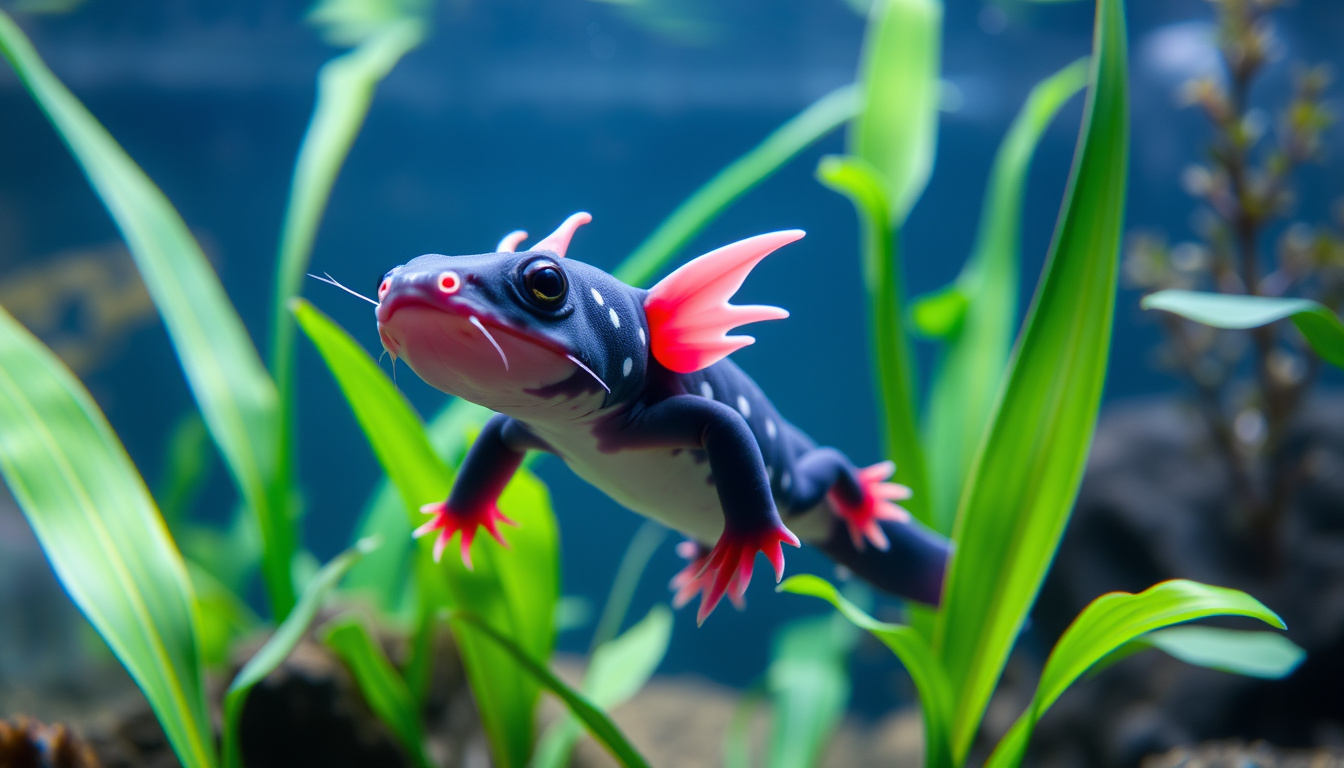
Understanding Axolotl Behavior: Insights into Their Unique Habits and Communication

Understanding Axolotl Behavior: Insights into Their Unique Habits and Communication

Axolotls, often referred to as ‘Mexican walking fish,’ are fascinating amphibians that have captured the hearts of many enthusiasts and researchers alike.

Known for their unique appearance and regenerative abilities, these creatures offer more than just visual appeal; they present an intriguing world of behavior that reflects their adaptation to both natural and captive environments.

In this article, we’ll delve into the various aspects of axolotl behavior, uncovering the intricacies of their social interactions, dietary habits, mating rituals, and more.

Whether you’re a new axolotl owner or simply curious about these remarkable animals, understanding axolotl behavior will deepen your appreciation for their role in the ecosystem and the importance of conserving their natural habitats.

Understanding<b> Axolotl Behavior</b>: Insights into Their Unique Habits and Communication’ style=’display: block; margin: auto; max-width: 100%; height: auto;’></p>
<h2>The TL;DR</h2>
<ul>
<li>Axolotls are unique amphibians with distinct behaviors shaped by their aquatic habitat.</li>
<li>Their social interactions and communication methods are crucial for understanding their well-being.</li>
<li>Feeding habits reveal important dietary preferences essential for their care in captivity.</li>
<li>Mating behaviors provide insights into their reproductive strategies and lifecycle.</li>
<li>Conservation efforts directly influence<b> axolotl behavior</b> and survival in the wild.</li>
</ul>
<h3>Introduction to Axolotls: An Overview</h3>
<p>Axolotls are fascinating creatures that have captured the hearts of aquarists and animal lovers alike.</p>
<p>Known for their distinct appearance and extraordinary regenerative abilities, these amphibians are more than just a cute face.</p>
<p>Understanding<b> axolotl behavior</b> is essential for anyone interested in keeping them as pets or studying their unique traits.</p>
<p>Typically found in the waters of Mexico’s ancient lake systems, axolotls exhibit unique habits that set them apart from other amphibians.</p>
<p>For instance, they spend most of their lives underwater and have gills that they use to breathe, giving them an alien-like appearance that’s both intriguing and adorable.</p>
<p>Observing their behavior offers insights into their social interactions, feeding habits, and overall health, making it crucial for potential owners to familiarize themselves with these aspects before diving into axolotl care.</p>
<h3>Natural Habitat and Its Impact on Behavior</h3>
<p>The natural habitat of the axolotl, a unique amphibian native to the lakes and canals of Mexico City, significantly influences its behavior.</p>
<p>Living in a dimly lit aquatic environment with plenty of hiding spots, such as submerged plants and rocks, axolotls exhibit fascinating behaviors that may not be as pronounced in more brightly lit or open spaces.</p>
<p>Their propensity for social interaction and exploration is enhanced by these habitat characteristics, as they thrive in areas where they can engage in leisurely swims or seek shelter when threatened.</p>
<p>Understanding<b> axolotl behavior</b> within their natural habitat is crucial, as it helps scientists and aquarists provide better care in captivity, ensuring these incredible creatures can express their natural tendencies, from foraging for food to diving into cozy nooks!</p>
<p>This insight not only enriches our knowledge of axolotls but also emphasizes the importance of preserving their natural habitats to maintain their unique behaviors and prevent their decline.</p>
<blockquote><p>‘The greatest gift of the garden is the restoration of the five senses.’ – Hanna Rion</p></blockquote>
<h3>Social Interactions and Communication in Axolotls</h3>
<p>When exploring the fascinating world of<b> axolotl behavior</b>, one can’t help but notice their unique social interactions and communication styles.</p>
<p>Unlike many other aquatic creatures, axolotls display a range of behaviors that reflect their environment and interactions with potential partners or threats.</p>
<p>These adorable, smiley-faced amphibians communicate primarily through body language—showing off their gills, posturing, and even swimming patterns to convey their mood and intentions.</p>
<p>For instance, a relaxed axolotl might float calmly among its surroundings, while an agitated one may dart about or hide in its habitat.</p>
<p>Interestingly, young axolotls are often more social than adults, frequently engaging in playful swimming frenzies or exploring together.</p>
<p>Understanding these aspects of<b> axolotl behavior</b> not only enhances our appreciation of these creatures but also emphasizes the importance of socialization in their day-to-day lives, contributing to their well-being in both natural and aquarium settings.</p>
<p><a href=

Feeding Habits: Understanding Their Dietary Preferences

Feeding Habits: Understanding Their Dietary Preferences

When diving into the fascinating world of axolotl behavior, one of the key aspects to explore is their feeding habits.

These unique creatures, often referred to as ‘Mexican walking fish,’ are carnivorous and have a diet that primarily consists of live prey.

In captivity, they thrive on a variety of foods including worms, small fish, and specially formulated pellets that cater to their nutritional needs.

It’s interesting to note that axolotls have a rather unique feeding technique; they don’t have a tongue, which means they use suction to draw in their meals!

Understanding their dietary preferences is crucial for any aspiring axolotl owner, as it ensures these quirky aquatic pets stay healthy and vibrant.

Providing a balanced diet that mimics their natural environment not only promotes better axolotl behavior but also enhances their overall well-being.

Mating Behaviors and Reproduction

When it comes to axolotl behavior, their mating rituals are quite fascinating and can offer us insights into their unique reproductive strategies.

In the vibrant underwater world they inhabit, male axolotls perform an elaborate courtship dance to woo potential mates.

This involves the male swimming in circles around the female, gently nudging her with his snout, which is all intended to stimulate her interest.

Once the female is receptive, the male releases sperm packets known as spermatophores onto the substrate, which the female will then pick up and use to fertilize her eggs internally.

After mating, the female can lay anywhere from 100 to 400 eggs in a single session, often attaching them to plants or other surfaces in their environment.

This process is not only crucial for their reproduction but also highlights the incredible adaptation of axolotl behavior in ensuring the continuation of their species in a somewhat challenging habitat.

Frequently Asked Questions

What are the main factors that influence axolotl behavior?

Axolotl behavior is primarily influenced by their natural habitat, social interactions, dietary needs, and conservation status.

Their environment impacts how they forage and interact with other axolotls, while their dietary preferences affect their feeding habits and behaviors.

How do axolotls communicate with one another?

Axolotls communicate through a combination of physical cues such as body posture and movement, as well as chemical signals released in the water.

These behaviors help them establish territories and signal readiness for mating.

What do axolotls eat, and how does this affect their behavior?

Axolotls are carnivorous and typically eat a diet composed of worms, small fish, and other protein-rich foods.

Their feeding habits can dictate their foraging behavior and social interactions, particularly during feeding times.

What is the mating behavior of axolotls like?

Axolotl mating behavior involves a courtship dance where the male vibrates his gills and follows the female, eventually leading to the male depositing sperm that the female later uses to fertilize her eggs.

This behavior is crucial for their reproduction.

How does the conservation status of axolotls affect their behavior?

The conservation status of axolotls affects their behavior by influencing their stress levels and interactions.

As they face threats in the wild, these stressors can alter their natural behaviors, such as mating and foraging.